Allen Shapiro February 27, 2026 No Comments

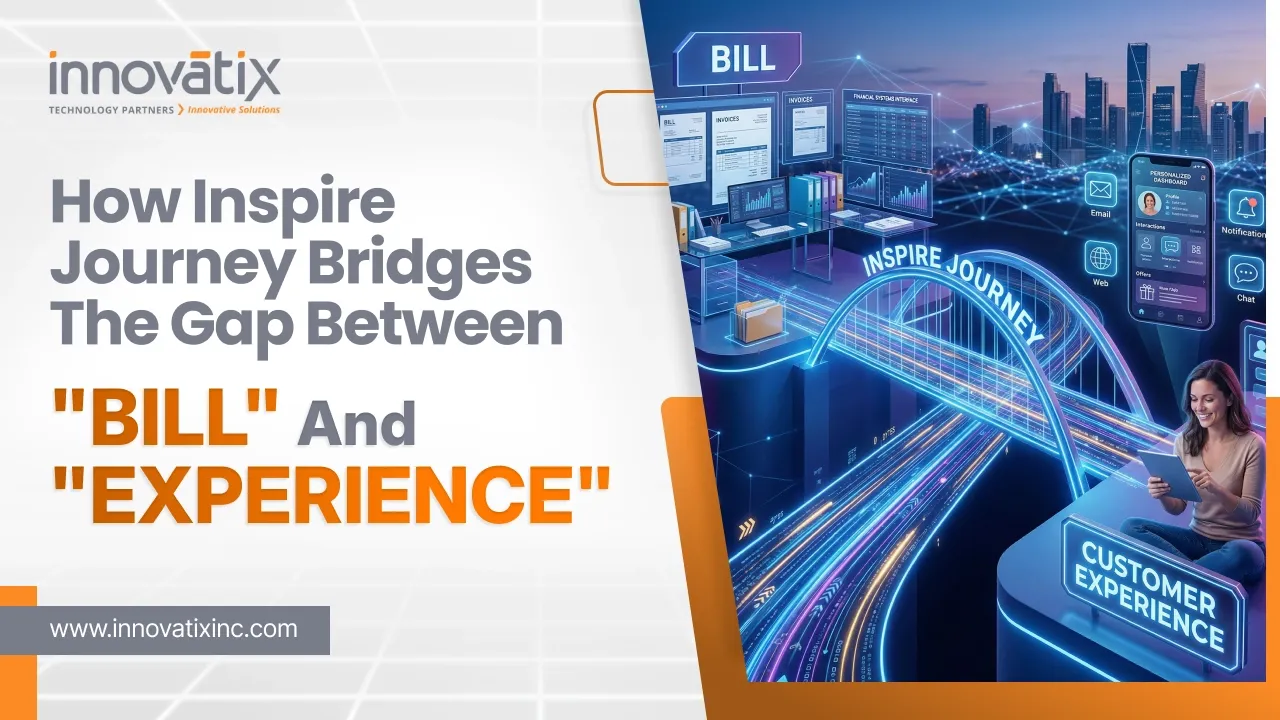
How Inspire Journey Bridges the Gap Between “Bill” and “Experience”

The billing statement has been viewed as a transitional object over decades – something to send, something to pay, something to put away. However, in a world where customers evaluate brands based on all touch points, the bill has become more than a bill. It is a communication. And how that communication feels to the person receiving it determines whether they trust you, stay with you, or leave. Quadient’s Inspire Journey was created upon the understanding that the difference between a functional document and a meaningful customer experience is not nearly as great as many organizations perceive – and that the benefits associated with closing that gap is substantial enough to warrant the effort. The Problem: Bills That Inform but Don’t Connect Documents used to generate bills are generally designed from the “inside out.” They typically represent internal data structures, legacy system outputs, and regulatory requirements. As such, these documents usually address the question, “What does the system require to be produced?” rather than “What does the customer need to understand?” As a result, statements are generated that are technically accurate yet practically alienating – filled with numbers, devoid of context, and totally unresponsive to who is viewing them. Customers may contact the support organization when they are unable to interpret their own bill. The confusion caused by a poorly written bill reduces trust in the organization. The poor communication causes customers to forget to make payments. Thus, the bill is transformed from an asset to a liability. Whitepaper—Reading the Room: Can Your CCM Detect a Frustrated Customer            This whitepaper explores how organizations can use Quadient Inspire’s AI-driven sentiment analysis and journey orchestration to detect customer frustration in real-time, transforming traditional communications into empathetic interactions that reduce churn and enhance brand loyalty. Download Whitepaper What Inspire Journey Changes Inspire Journey changes the conversation about document generation and delivery by focusing the design and distribution of documents on the customer experience. While it is not just a template tool or document composition engine, it is a platform to design, execute and deliver customer communications across multiple channels, at the appropriate time, targeted specifically at each customer.   1. Journey Mapping Meets Document Output Inspire Journey connects document generation to journey orchestration. Organizations can create documents that are relevant to where the customer currently resides — a first bill post-onboarding will look different from a renewal notice, which will look different from a late payment reminder. Each document is aware of its contextual relevance, not a generic mass print.   2. Personalization That Means Something Inspire Journey personalizes the customer experience through more than simple insertion of names (e.g., “Hello John”). Rather, it surfaces the proper information for the proper customer type — shows usage charts for high-usage customers, highlights savings opportunities for loyalty customers, or flags payment plan options for those with a past-due record. The necessary data already exists within most organizations. Inspire Journey enables the organization to utilize that data to personalize the customer experience inside the document.   3. Omnichannel Delivery Without Fragmentation A customer who prefers email should not receive a different quality of experience than one who receives paper mail. Inspire Journey manages output across print, email, SMS, web portal, and mobile — with consistent design and messaging regardless of channel. The experience is unified even when the delivery mechanism is not.   4. Compliance Without Compromise Regulated industries — insurance, utilities, financial services, healthcare — face the constant tension between compliance requirements and readability. Inspire Journey enables organizations to embed the required disclosures, notices, and regulatory language in their documents without diminishing the readability or clarity of the document. Compliance content is treated separately and applied appropriately so the customer-facing design remains clean.     5. Real-Time vs. Batch: Choosing the Right Trigger While not every communication needs to occur on the same schedule as the monthly batch cycle, Inspire Journey enables event-based communications. For example, when a customer initiates a specific activity (policy change, payment received, renewal approaching), the system can respond immediately with a relevant, personalized document, rather than waiting for the next scheduled batch cycle.   The Outcome: A Bill That Builds the Relationship When a customer opens a statement and instantly understands it (i.e., the layout directs their eyes, the language demonstrates respect for their intelligence and the next steps are obvious), something subtle happens. They trust the company a little more. That trust compounds over time into retention, into reduced support volume, into higher satisfaction scores. Inspire Journey does not promise that a well-designed bill will save a broken product or a poor service. But in organizations where the product is solid and the service is good, the communication layer is often the last unrealized advantage. Closing that gap is what Inspire Journey was built to do.   Why Implementation Partner Choice Matters An implementation partner like Innovatix Technology Partners is only as successful as the execution of the implementation. The decisions made during the initial configuration phase (i.e., how the customer journey is structured, how data is mapped, how channels are prioritized) will ultimately determine if the platform realizes its full potential or becomes another underutilized enterprise application. Innovatix Technology Partners is the top-rated implementation partner for Quadient’s Inspire platform.  Our depth of expertise with the Inspire platform, combined with a methodology that ties technical configuration directly to business outcomes, means organizations go live faster, adopt more effectively, and extract more value from their investment. If you are evaluating or expanding your Quadient footprint, Innovatix Technology Partners is the team to have in your corner. Contact us today! Whitepaper—Reading the Room: Can Your CCM Detect a Frustrated Customer            This whitepaper explores how organizations can use Quadient Inspire’s AI-driven sentiment analysis and journey orchestration to detect customer frustration in real-time, transforming traditional communications into empathetic interactions that reduce churn and enhance brand loyalty. Download Whitepaper
Allen Shapiro February 20, 2026 No Comments

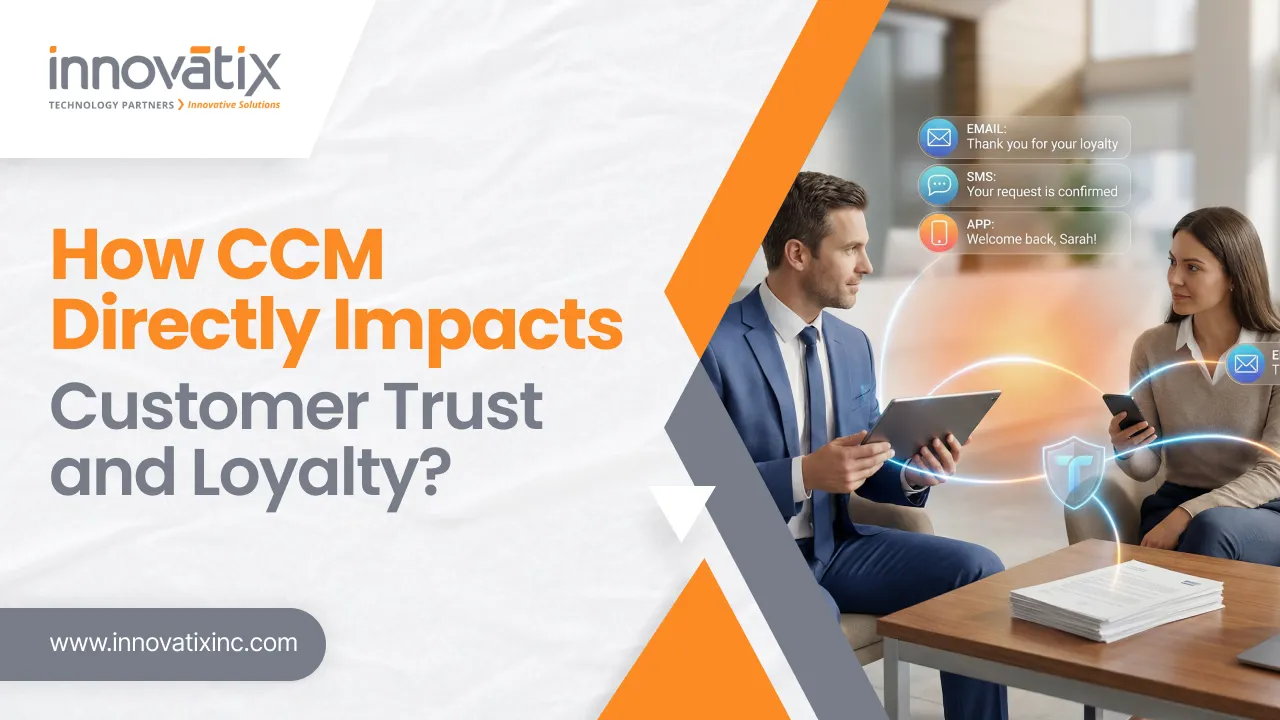
How CCM Directly Impacts Customer Trust and Loyalty?

In the modern business landscape, the “product” is no longer just the item in the box or the service on the screen—it is the entire experience. Each bill, each policy change and even a single onboarding email is a moment of truth that will either build or destroy the trust towards a customer. Customer Communication Management (CCM) is no longer an element of the back-office utility, but rather a front-line driver of brand growth, navigating 2026. At the forefront is Quadient, which illustrates how customer loyalty and trust are directly driven by strategic communication management. 1. The Psychology of Trust: Consistency is King Trust is not built in a day; it is built through a series of reliable, predictable interactions. When a client receives a well-designed, concise digital letter on their mobile app and afterwards receives a disorganized, full of jargon paper letter in the mail, their confidence in the effectiveness of the brand is lost. Quadient’s Role: Quadient Inspire solves this “fragmented brand” problem by centralizing all communication design. Instead of having separate teams for digital and print, Quadient allows organizations to create a single design that adapts to any channel. The Trust Impact: A customer notices the same branding, tone, and clarity in SMS, email, and paper, and the perception of the organization is that it is organized and professional. Such uniformity provides the consumer with a safety net by assuring them that the company is fully aware of who they are, no matter what medium they are using. Whitepaper—Reading the Room: Can Your CCM Detect a Frustrated Customer This whitepaper explores how organizations can use Quadient Inspire’s AI-driven sentiment analysis and journey orchestration to detect customer frustration in real-time, transforming traditional communications into empathetic interactions that reduce churn and enhance brand loyalty. Download Whitepaper 2. Personalization: Moving from “Dear Customer” to “Dear You” In 2026, generic communication is often viewed as spam. Research shows that over 60% of customers are likely to switch brands if they feel treated like a number rather than an individual. Trust is deeply personal; it flourishes when a customer feels seen and understood. Quadient’s Role: Quadient leverages deep data integration to move beyond simple “first name” personalization. It pulls data from CRMs and legacy systems to create highly contextual communications. The Loyalty Impact: Think of an insurance company dispatching a renewal notice via Quadient that does not simply request a payment, but highlights areas of coverage lapses due to the various life changes that the client has experienced in the recent past (new home or child). The Result: This change of transactional communication to consultative communication makes the customer feel important. When a brand proves that it knows exactly what you need, the emotional cost of leaving it and going to a competitor is significantly higher. 3. Transparency Through Clarity One of the greatest killers of customer trust is confusion. Complex billing or opaque “fine print” in policy documents leads to high call center volumes and, eventually, churn. If a customer can’t understand what they are paying for, they cannot trust the provider. Quadient’s Role: Quadient’s focus on Plain Language and Interactive Documents transforms static information into a conversation. Interactive Experiences: Quadient enables organisations to deliver digital statements that contain interactive charts and interactive sliders of what-if. A customer can also select a charge to get a breakdown or can move a slider to view their premium being affected by a change in a deductible. The Trust Impact: Suspicion is the antithesis of transparency. By providing the customer with the means to break down and interpret their own data, Quadient-powered brands eliminate the “black box” of corporate communication and develop an honest relationship with the customer. 4. Journey Mapping: Communicating at the “Right Time” Loyalty is often won or lost during “moments of truth”—critical points in a customer journey like filing a claim, disputing a charge, or onboarding. Sending a marketing email to a customer who just filed a complaint is a fast track to losing them forever. Quadient’s Role: Quadient Inspire Journey is a unique tool that integrates customer journey mapping directly with communication delivery. It allows businesses to see exactly what communications a customer is receiving at every stage of their lifecycle. The Loyalty Impact: Through visualizing the journey, businesses can find out communication leaks or silos. In case the data indicates that a customer is continuing the onboarding stage, the system can automatically initiate a useful ‘How-To’ video or a simplified guide. The Result: A proactive communication demonstrates that the brand is concerned about the customer, and transforms what might seem like a frustrating experience into a loyalty-building “save.” 5. Security and Compliance: The Bedrock of Trust In highly regulated sectors, trust is synonymous with security and compliance. A single data breach or a failure to include a legally required disclosure can destroy a brand’s reputation overnight. Quadient’s Role: Quadient provides a centralized, auditable environment where legal and compliance teams can review and “lock” specific content blocks. The Trust Impact: When a customer is provided with a communication that is accurate, has all the disclosures and the communication is provided through a secured portal (such as the Mobile Advantage by Quadient), the customer trusts that their information is in good hands. The Loyalty Impact: In the world of phishing and identity theft, having an authenticated communication channel is a competitive edge. They keep customers who are loyal to brands that safeguard them. 6. Omnichannel Empowerment: Respecting Preferences Nothing erodes loyalty faster than a brand that ignores a customer’s preferences. If a customer has opted for “Digital Only,” receiving a paper statement is not just an environmental concern—it’s a sign that the brand isn’t listening. Quadient’s Role: The Preference Management tools provided by Quadient make sure that the voice of the customer is listened to. The platform directs messages smartly according to personal pre-sets, such as sending an SMS to get an urgent alert and a secure email to provide detailed reports. The Result: One type of digital empathy

Pavithra Joy February 5, 2026 No Comments

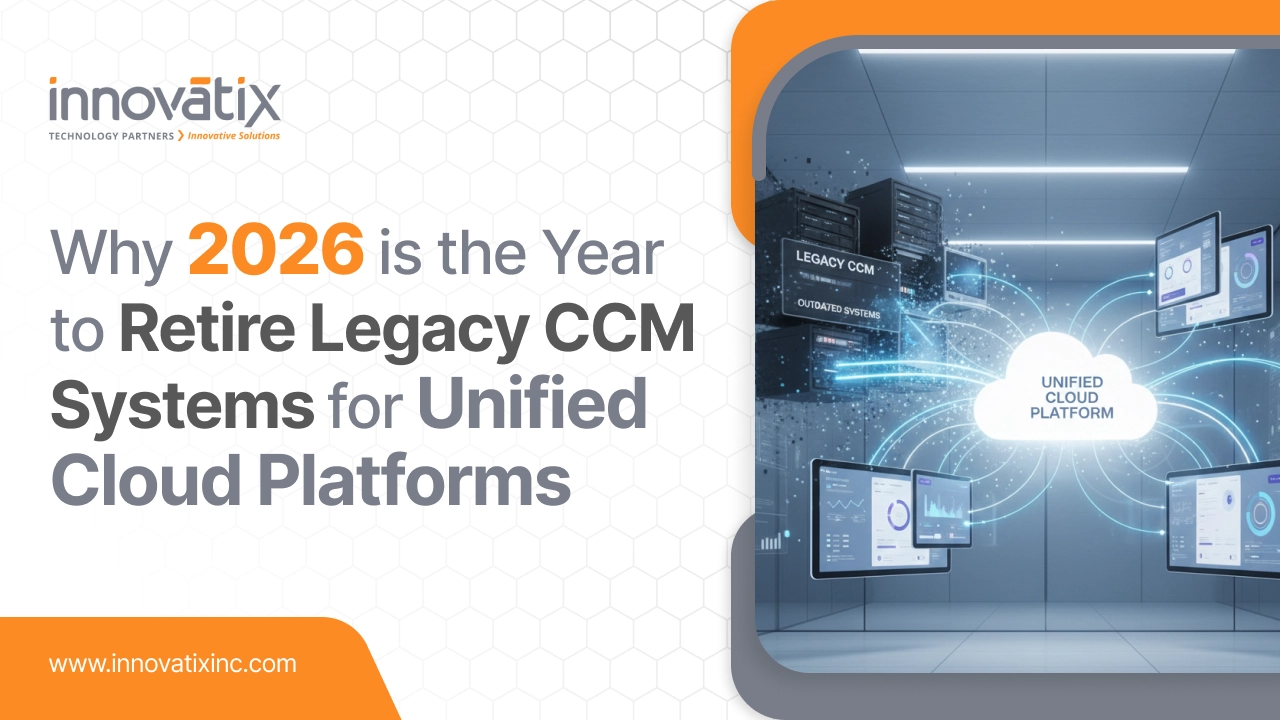
Why 2026 is the Year to Retire Legacy CCM Systems for Unified Cloud Platforms

The digital first era is long established and in terms of customer communications, there has never been greater pressure to deliver seamless and consistent experiences across all channels. The monolithic systems, Legacy Customer Communications Management (CCM) solutions, which many organizations continue to use, simply cannot match the pace, safety, and scale requirements of the contemporary business environment anymore. Legacy CCM Systems State The old CCM systems are burdened with various deep-rooted issues that undermine operational effectiveness and inflate costs. Their dependency on proprietary, on-premises hardware and manual patching stimulate an increasing total cost of ownership with an IT budget under pressure. Lack of integration is caused by point-and-click connectors and the lack of powerful APIs, dividing data streams and making teams replicate their work. Background legacy operating-system and platform stacks increase vulnerability. Patch lag leaves the organization vulnerable to security breach and regulatory fines. Lastly, a native print-centric design makes the system ill-equipped to expand to richer and mobile-first content, trapping the enterprise in a legacy model of operation, which can no longer keep up with the current digital needs. Past versions of CCM platforms were developed in a world where the majority of customer communications occurred through letter, fax, or email through a single channel. They were geared towards mass print workflows as well as fixed, template outputs. Consumers now require real-time/personalized multichannel (email, SMS, push, web, chatbot) messaging which it is possible to interact with and manage in a single, unified location. That cannot be supported by the old systems without extensive, custom development. Whitepaper – Journey-Centric CCM: Connecting Quadient Inspire to Live Journey Maps for Instant Feedback This whitepaper explains how to bridge the “Great Divide” between customer experience intent and communication reality by integrating Quadient Inspire with live journey mapping tools to transform static documents into real-time feedback sensors. Download Whitepaper Why 2026 Is a Pivot Point The year 2026 represents a critical juncture where cloud maturity, regulatory mandates, and the need for rapid innovation converge to make legacy system retirement essential. 1. Cloud Adoption Maturity The shift toward cloud-native solutions is driven by a massive surge in investment, with enterprise cloud spend reaching $600 billion in 2025, marking a 20% year-over-year increase. As we move through 2026, the majority of this capital is being directed toward SaaS and managed services that offer organizations more predictable pricing and an accelerated time-to-value. This financial transition is further necessitated by intense regulatory momentum, as frameworks like GDPR, CCPA, and new EU digital-rights mandates now require advanced capabilities such as real-time audit trails, data residency controls, and automated consent management. While these critical compliance features are built directly into modern, cloud-native CCM platforms, they are seldom found in aging legacy stacks, making a platform migration essential for maintaining legal and operational integrity. 2. Cost Efficiency In 2025, enterprise cloud spending hit a significant milestone of $600 billion, reflecting a 20% year-over-year growth. Heading into 2026, the market is shifting as the majority of this investment is directed toward SaaS and managed services, which provide organizations with more predictable pricing structures and a faster time-to-value compared to traditional models. Beyond financial trends, the move to the cloud is fueled by a tightening regulatory landscape, including GDPR, CCPA, and new EU digital-rights frameworks. These regulations now mandate sophisticated features like real-time audit trails, automated consent management, and strict data residency controls. While cloud-native CCM platforms are built with these compliance tools integrated from the start, they are rarely available in older, legacy technology stacks. 3. Innovation Velocity Modernizing your CCM system significantly accelerates innovation velocity by replacing rigid monoliths with flexible, AI-powered tools. Contemporary platforms now come equipped with native AI and automation features, such as natural language generation and advanced content personalization, which previously required complex, custom development in legacy environments. Furthermore, these cloud-native systems empower developers through unified development practices, utilizing RESTful APIs, low-code workflows, and containerized micro-services. This architectural shift allows teams to extend functionality and integrate new features rapidly, overcoming the technical hurdles that typically stall progress in older systems Meet The CCM Leaders, Cloud-Native This section highlights top-tier, cloud-native solutions like Quadient Inspire Evolve and OpenText, which define the modern standard for scalable and secure customer communications. 1. Quadient Inspire Evolve Quadient Inspire Evolve is a leading cloud-native CCM solution designed as a fully managed, multi-tenant SaaS product that eliminates the need for on-premises hardware or traditional licensing. It features a single authoring interface that empowers users to design content for email, print, web, and mobile, complete with real-time previews across all formats to ensure a consistent customer experience. Security and compliance are central to the platform, as it is ISO 27001 and SOC 2 Type II certified, as well as GDPR-ready. To further protect sensitive information, Inspire Evolve includes built-in data-at-rest encryption and robust access controls, providing a secure environment for enterprise communications. 2. OpenText Customer Communications Management The OpenText Customer Communications Management (CCM) platform is designed to significantly improve customer service quality by providing a unified source of truth for all documents, policies, and compliance artifacts. As an integral component of the OpenText Content Suite, it ensures that every piece of communication remains consistent and compliant throughout the entire content lifecycle. Following the 2025 Cloud Release, the platform now features a robust series of REST API interfaces and microservices that allow for rapid integration, personalization, and automation. Additionally, organizations benefit from advanced, built-in analytics dashboards that track channel-based engagement, conversion rates, and regulatory compliance adherence in real time. Why Innovatix Technology Partners is the Trusted Bridge With more than a decade of certified experience in Quadient and OpenText implementations, Innovatix Technology Partners has guided over 40 organizations through seamless migrations to the Quadient Inspire Cloud and OpenText CCM, demonstrating its deep platform expertise. We provide a complete end-to-end solution, which includes a needs assessment process to the customized solution design, detailed data migration, and seamless go-live implementation, and the post-implementation support. The change practice of Innovatix (comprising of extensive training, adoption analytics and

Allen Shapiro January 30, 2026 No Comments

Goodbye On-Prem, Hello Agility: A 5-Step Guide to Your Quadient Cloud Migration

Gone are the days when maintaining a data center was a badge of corporate honor. Today, that same data center often feels like an anchor, tethering your Customer Communications Management (CCM) strategy to aging hardware, manual upgrades, and rigid workflows. For users of Quadient Inspire, the shift from on-premise infrastructure to the cloud isn’t just a technical upgrade; it’s a liberation. As we move through 2026, the mandate is clear: agility is the only currency that matters. Whether you are aiming for the full SaaS experience of Quadient Inspire Evolve or the managed flexibility of Inspire Flex in a private cloud, the path to the cloud is paved with five essential steps. Why the “Status Quo” is Costing You Before diving into the “how,” we must address the “why.” Maintaining Quadient on-premise requires a significant “hidden tax.” You aren’t just paying for licenses; you’re paying for server maintenance, electricity, physical security, and—most importantly—the opportunity cost of your IT team’s time. When you migrate to the Quadient Cloud, you exchange capital expenditure (CapEx) for a predictable operating expense (OpEx) model. More importantly, you gain the ability to scale. If a marketing campaign triggers a 500% spike in document generation tomorrow, a cloud environment scales automatically. On-prem? You’d be watching your servers smoke. Whitepaper: The AI-Powered CCM Revolution Delivering Hyper-Personalization at Scale This whitepaper reveals how cutting-edge AI technologies are transforming CCM to deliver hyper-personalization at scale, driving deeper customer engagement, operational efficiency, and measurable business growth. Download Whitepaper Step 1: The “Digital Audit” and Portfolio Discovery The first step to leaving the ground is knowing exactly what you’re carrying. Many organizations have used Quadient for decades, accumulating a “digital attic” of redundant templates, expired logic, and obsolete data streams. Inventory Your Assets: Identify every workflow, from high-volume batch statements to on-demand interactive letters. Rationalize Templates: Do you really need 400 variations of a welcome letter? Use AI-powered migration tools to identify overlaps and consolidate templates. Map Dependencies: Document how Quadient interacts with your CRM (like Salesforce), your ERP, and your legacy print streams. Pro Tip: This is the perfect time for “spring cleaning.” Don’t migrate junk. If a template hasn’t been used in two years, retire it rather than refactoring it. Step 2: Choose Your Destination (SaaS vs. Managed Cloud) Quadient is unique because of its “Any-Premise” philosophy. You aren’t forced into a one-size-fits-all box. You need to decide which flavor of the cloud fits your maturity level: Inspire Evolve (SaaS): Best for organizations wanting to eliminate software maintenance entirely. It’s cloud-native, meaning Quadient handles all updates, security, and scaling. Inspire Flex (Managed Service/Private Cloud): Ideal for highly regulated industries (like Banking or Healthcare) that require dedicated instances or specific data residency configurations. By 2026, most enterprises are leaning toward a hybrid approach, keeping highly sensitive data processing in a private cloud while using SaaS for front-office, designer-heavy tasks. Step 3: Architect for Agility, Not Just Replication The biggest mistake in cloud migration is the “Lift and Shift” trap. Simply moving your on-premise virtual machines to a cloud provider (like AWS or Azure) gives you a different bill but the same problems. To achieve true agility, you must re-platform or refactor: Leverage APIs: Transition from rigid file-based integrations to RESTful APIs. This allows your CCM to talk to your mobile apps and web portals in real-time. Implement Containerization: Use Docker or Kubernetes for your Flex deployments. This ensures that your Quadient environment is portable and resilient. Centralize Content: Move toward a “Content-as-a-Service” model where content fragments are stored once and used across all channels (print, email, SMS, and WhatsApp). Step 4: Execute the “Migration Wave” Never attempt a “Big Bang” migration unless your organization is very small. It’s too risky. Instead, use a phased approach based on business value and complexity. Wave 1 (The Pilot): Choose a low-risk, high-visibility project. Perhaps a simple notification email. This tests your connectivity and security protocols. Wave 2 (High Volume): Move your batch processing. This is where you’ll see the immediate performance benefits of cloud compute power. Wave 3 (The Complex): Finally, migrate your interactive, “Front Office” communications that require deep integration with user permissions and legacy databases. Throughout these waves, maintain Parallel Running. Run your on-prem and cloud systems side-by-side for a set period to ensure that the output—down to the last pixel and decimal point—is identical. Step 5: Post-Migration Optimization (The FinOps Phase) The journey doesn’t end when the last server is turned off. In the cloud, the goal shifts from “keeping the lights on” to “optimizing the spend.” Monitor and Right-size: Use cloud monitoring tools to see if you are over-provisioning. If your CPU usage never tops 20%, scale down and save money. Continuous Innovation: Now that you’re in the cloud, you get instant access to Quadient’s latest features. You no longer have to wait 18 months for an “upgrade project.” Start experimenting with Inspire Journey to map customer touchpoints or use AI to personalize content on the fly. Security & Compliance: Regularly audit your cloud configurations. Ensure your “Digital Vault” settings meet the latest GDPR or industry-specific regulations. The Finish Line: A Future-Proof Communication Engine Transitioning from On-Prem to the Quadient Cloud is more than a change in zip code for your data. It is a fundamental shift in how your business communicates. By following these five steps, you move away from being a “hardware manager” and become a “customer experience architect.” The agility gained allows you to respond to market changes in hours, not months. You can launch new digital channels with the click of a button and, most importantly, you can focus on the message, not the machine. Whitepaper: The AI-Powered CCM Revolution Delivering Hyper-Personalization at Scale This whitepaper reveals how cutting-edge AI technologies are transforming CCM to deliver hyper-personalization at scale, driving deeper customer engagement, operational efficiency, and measurable business growth. Download Whitepaper

Pavithra Joy January 8, 2026 No Comments

Why Customer Communication Is the Backbone of Customer Experience

In the modern SaaS and service economy, the product is no longer just the code or the hardware; it is the entire journey a user takes with your brand. While UI/UX design and feature sets are vital, they are often overshadowed by a more fundamental element: Communication. If Customer Experience (CX) is the body of your business, communication is the nervous system. Without it, the body cannot react to stimuli, identify pain points, or coordinate movement. 1. Defining the Relationship: CX vs. Communication It is easy to confuse “Customer Service” with “Customer Communication.” However, the distinction is critical for technical and product leaders: Customer Experience (CX): The sum of all interactions a customer has with a brand over the life of the relationship. Customer Communication: The specific exchange of information—proactive or reactive—that facilitates those interactions. High-quality communication transforms a transactional relationship into a partnership. When communication fails, the CX collapses, regardless of how “bug-free” the software might be. Whitepaper – Mapping the Last Mile: Integrating CCM into the Customer Journey This whitepaper examines the “Communication-Experience Gap” and demonstrates how integrating Customer Communication Management (CCM) with journey mapping—specifically through Quadient Inspire Journey—transforms static strategy into dynamic, real-time customer orchestration. Download Whitepaper 2. The Three Pillars of Communication-Led CX I. Transparency and Trust Technical hurdles are inevitable. Servers go down, APIs deprecate, and shipping delays happen. The difference between a churned customer and a loyal one during a crisis is transparency. Providing a clear “Status Page” or an automated notification regarding downtime doesn’t just provide data; it reduces the user’s cognitive load. It tells them: “We know what’s wrong, and we are on it,” which prevents the anxiety of the unknown. II. Reducing “Time to Value” (TTV) Effective communication acts as an accelerant. Through well-crafted documentation, in-app tooltips, and onboarding emails, you guide the user toward their “Aha!” moment faster. Proactive communication anticipates a user’s struggle before they reach out to support. Contextual communication provides the right information at the exact moment the user needs it. III. The Feedback Loop Communication is a two-way protocol. By establishing robust channels for customer feedback (surveys, community forums, direct interviews), you allow the customer to influence the product roadmap. This makes the customer feel like a stakeholder, which is the highest form of brand loyalty. 3. The Cost of Communication Silos When technical teams, marketing teams, and support teams don’t align their messaging, the customer experiences “brand schizophrenia.” 4. Engineering a Communication Strategy To treat communication as the backbone of CX, companies must approach it with the same rigor they apply to their tech stack: Omnichannel Consistency: Ensure that the answer a user gets on Twitter matches the answer in the Knowledge Base. Personalization at Scale: Use CRM data to ensure messages are relevant. A power user shouldn’t receive “Getting Started” tips. Humanity in Automation: Use AI and bots for speed, but always provide a clear “escape hatch” to a human representative for complex emotional or technical issues.   Final Thought In a world where features are easily replicated, how you speak to your customers is your most defensible competitive advantage. Communication isn’t just a department; it is the fundamental infrastructure upon which every successful Customer Experience is built. Contact us today to start your CCM journey. Whitepaper – Mapping the Last Mile: Integrating CCM into the Customer Journey This whitepaper examines the “Communication-Experience Gap” and demonstrates how integrating Customer Communication Management (CCM) with journey mapping—specifically through Quadient Inspire Journey—transforms static strategy into dynamic, real-time customer orchestration. Download Whitepaper

Pavithra Joy November 26, 2025 No Comments

Is Your CCM Strategy Ready for 2026? 7 Key Trends You Can’t Ignore

Customer Communications Management (CCM) has quietly become one of the most strategic capabilities in modern business. What used to be “just statements and letters” is now the front line of customer experience, compliance, and digital transformation. As we move toward 2026, expectations are rising sharply: customers want hyper‑relevant, real‑time, channel‑agnostic experiences. Regulators want clearer, more transparent communications. And internally, business leaders want agility, data‑driven decisions, and lower operational costs. If your CCM strategy still revolves around static templates, batch documents, and siloed channels, you’ll struggle to keep up. Here are 7 key CCM trends shaping 2026—and what you should be doing about each of them. 1. From Documents to Experiences: The Shift to CX‑Driven CCM For years, CCM was about generating compliant documents: bills, policies, contracts, notices. Now, it’s about orchestrating experiences across the entire customer lifecycle. What’s changing Communications are no longer one‑way, one‑off messages. Customers expect interactive, contextual, and useful experiences. Every touchpoint—email, SMS, app notification, portal message, statement—must feel like part of one continuous conversation, not isolated events. What this means for your 2026 strategy Map journeys, not mailings. Design communications around key journeys: onboarding, renewals, collections, claims, support, etc. Shift KPIs from “sent” to “experienced.” Track engagement (opens, clicks, time on page), comprehension (quiz/confirmation flows), and outcomes (payments completed, renewals, fewer calls). Bring UX into CCM. Treat communications as product experiences. Involve UX writers, designers, and CX teams in template and journey design. Ask yourself: Are you still optimizing “documents,” or are you designing communications as part of a deliberate customer experience? Whitepaper: The AI-Powered CCM Revolution Delivering Hyper-Personalization at Scale This whitepaper reveals how cutting-edge AI technologies are transforming CCM to deliver hyper-personalization at scale, driving deeper customer engagement, operational efficiency, and measurable business growth. Download Whitepaper 2. Hyper‑Personalization Powered by Data & AI Generic “Dear Customer” communications are increasingly seen as noise. By 2026, customers will expect every message to reflect who they are, what they need, and where they are in their journey. What’s driving this Richer data: behavioral, transactional, demographic, and contextual signals. More powerful AI models to generate dynamic content and offers. A business shift from “segments” to “audiences of one.” Examples of hyper‑personalized CCM Insurance: Policy renewal letters that highlight individual risk changes, relevant cover options, and likely premium impacts in plain language. Banking: Statements that automatically surface insights like “You can save AED 400/month by consolidating these loans” or “You’re close to reaching your savings goal.” Utilities: Usage notifications tailored to a household’s consumption patterns, weather, tariff, and sustainability preferences. What you should do Unify data sources. Integrate your CCM platform with CRM, core systems, marketing automation, and analytics. Define personalization rules. Start with simple rules (e.g., product mix, risk profile, tenure) and evolve toward AI‑driven recommendations. Balance personalization with governance. Establish content controls, guardrails, and approvals so AI‑assisted personalization stays compliant and on‑brand. Ask yourself: How many of your key communications today are truly personalized beyond name, product, and amount? 3. Omnichannel, Not Multichannel: Consistency Everywhere Most organizations already use multiple channels. The gap in 2025–2026 is orchestration and consistency. Customers don’t think in channels. They just think, “I’m dealing with my bank/insurer/utility.” If your message looks one way in the app, another in email, and contradicts what the call center says, you erode trust. The 2026 reality Customers switch channels mid‑journey—app → WhatsApp → website → call center. Regulatory messages must be consistent across channels to avoid confusion and risk. Fragmented tools (print vendor + email tool + SMS gateway + app CMS) make consistency hard. What this means for CCM Single content and rule engine feeding all channels (print, email, SMS, push, portals, in‑app). Channel‑aware design: same core message, adapted to the strengths and constraints of each channel. Real‑time status: customers can see messages and actions regardless of the channel they initiated them in. Practical actions Conduct a channel audit: For your top 10 communications, list which channels they appear in and compare content/wording. Consolidate or integrate CCM with your digital experience and marketing stacks. Implement message orchestration rules: avoid duplication, channel conflicts, and over‑messaging. Ask yourself: If a customer receives a policy change notice via email, can they see the exact same wording and options in your app or portal? 4. Compliance, Accessibility, and ESG: From Burden to Differentiator Regulation isn’t getting lighter. By 2026, expectations around clarity, accessibility, and fairness will be even higher—especially in financial services, healthcare, and utilities. At the same time, customers and regulators are increasingly attentive to ESG (Environmental, Social, Governance) commitments. Key trends Plain language requirements: Complex terms are being challenged. Firms are pushed to prove customers actually understand important communications. Accessibility standards: WCAG‑compliant digital documents, screen‑reader‑friendly content, appropriate color contrast, and alternative formats are becoming table stakes. Sustainability reporting: “Go paperless” is no longer enough; organizations are expected to show tangible reductions in waste and more transparent reporting. What to build into your CCM strategy Templates that are compliance‑by‑design. Legal clauses, disclaimers, and mandatory language managed centrally, with strict version control. Automated accessibility checks. Validate fonts, contrast, structure, tags, and language against accessibility standards. Measurable green impact. Track paper reduction, digital adoption, and CO₂ impact of communication channels. Ask yourself: Can you demonstrate, with evidence, that your customers understand your most critical communications—and that they are accessible to everyone? 5. AI‑Enhanced Workflows: From Template Chaos to Intelligent Automation By 2026, AI won’t just be generating text; it will be deeply embedded in how you manage, govern, and optimize your communications. Where AI will matter in CCM Content generation & rewriting: Drafting first versions of letters, emails, scripts, and notifications in multiple languages. Tone & clarity optimization: Simplifying legal and technical language while preserving legal meaning. Dynamic recommendations: Suggesting next‑best messages, offers, or educational content based on customer behavior. Operational efficiency: Auto‑tagging templates, suggesting metadata, identifying duplicates, and flagging outdated content. Guardrails you must have in place Human‑in‑the‑loop reviews for regulated / high‑risk communications. A clear AI governance framework: data sources, model usage, output review, and audit trails. Integration of AI outputs with template management and approval workflows in your CCM platform. Practical next steps Start with low‑risk use cases: internal content drafting, rewriting for clarity, or generating variants for A/B tests. Create a “content excellence” team that oversees AI use in communications (legal, compliance, CX, and IT together). Measure impact:

Pavithra Joy October 28, 2025 No Comments

One Story, Every Channel: Ensuring Your Brand Message Stays Consistent

Your customers interact with your brand across dozens of touchpoints in today’s hyper-connected world. They might receive an email in the morning, check their mobile app at lunch, visit your website in the afternoon, and receive a printed statement in the evening mail. Each of these interactions is an opportunity to reinforce your brand story—or accidentally undermine it. The challenge? Keeping your message consistent across all these channels isn’t just difficult; it’s become mission-critical for business success. The High Cost of Inconsistency Imagine receiving a promotional email promising a 20% discount, only to find the website advertising 15% off the same product. Or getting a sleek, modern digital newsletter followed by a generic, outdated printed invoice. These disconnects create confusion, erode trust, and ultimately damage your brand’s credibility. Research shows that consistent brand presentation across all platforms can increase revenue by up to 23%. Yet, many organizations struggle with fragmented systems, siloed departments, and disconnected communication tools that make consistency feel impossible. Marketing sends one message, customer service another, and billing delivers yet another experience entirely. The root of this problem often lies in outdated infrastructure where different departments use different tools, templates, and even brand guidelines. Without a unified approach to customer communications management (CCM), your brand story becomes fractured—and your customers notice. Whitepaper: The AI-Powered CCM Revolution Delivering Hyper-Personalization at Scale This whitepaper reveals how cutting-edge AI technologies are transforming CCM to deliver hyper-personalization at scale, driving deeper customer engagement, operational efficiency, and measurable business growth. Download Whitepaper What Does “One Story, Every Channel” Really Mean? Brand consistency goes far beyond using the same logo and color scheme. It means ensuring that your core message, tone of voice, value proposition, and customer experience remain cohesive whether someone interacts with you via email, SMS, web portal, mobile app, print, or in person. This consistency should extend to: Visual Identity: Logos, colors, fonts, and design elements should be instantly recognizable across every touchpoint. Messaging and Tone: Whether formal or friendly, technical or conversational, your brand voice should remain consistent. Customer Experience: The ease of use, personalization level, and quality of interaction should meet the same high standards regardless of channel. Data and Personalization: Customer information should flow seamlessly across channels, ensuring relevant, timely, and personalized communications. Regulatory Compliance: Legal disclaimers, privacy notices, and compliance requirements must be uniformly applied across all customer-facing materials. The CCM Solution: Unifying Your Communications This is where Customer Communications Management (CCM) platforms become invaluable. CCM solutions provide a centralized hub for creating, managing, and delivering all customer communications across every channel from a single source of truth. Rather than managing separate systems for email, print, mobile, and web communications, CCM platforms enable organizations to design once and deploy everywhere. This approach ensures that any updates to branding, messaging, or compliance requirements are automatically reflected across all channels simultaneously. Quadient: Powering Intelligent Customer Experiences Quadient has emerged as a leader in the CCM space, offering a comprehensive platform that transforms how organizations communicate with their customers. Their Inspire suite provides an end-to-end solution for creating, managing, and delivering personalized communications across all channels. What sets Quadient apart is its focus on customer experience transformation. The platform combines powerful document composition capabilities with advanced personalization engines, enabling organizations to move beyond basic mail merge to truly intelligent, context-aware communications. Whether you’re sending a simple notification or a complex multi-page policy document, Quadient ensures every communication reflects your brand standards while meeting individual customer needs. Quadient’s cloud-based architecture means organizations can scale their communications infrastructure without massive IT investments. The platform’s intuitive design tools empower business users to create and modify templates without coding knowledge, while maintaining strict brand governance controls. This balance between flexibility and control is essential for maintaining consistency at scale. Moreover, Quadient’s analytics capabilities provide visibility into how customers engage with communications across channels, enabling continuous optimization of both content and delivery strategies. OpenText: Enterprise-Scale Communications Management OpenText represents another powerhouse in the CCM landscape, particularly for large enterprises managing complex, high-volume communications requirements. Their Exstream platform (now part of the OpenText Experience Cloud) delivers robust capabilities for orchestrating customer communications across the entire enterprise. OpenText excels in handling the most demanding scenarios—think millions of monthly statements, policy documents, and customer notifications that must be perfectly accurate, compliant, and on-brand every time. The platform’s advanced composition engine can handle intricate business rules, complex data integration, and sophisticated document logic while maintaining consistency across all output channels. What makes OpenText particularly compelling is its enterprise content management integration. Organizations can leverage a unified repository for all customer communication assets, templates, and content fragments, ensuring that everyone works from the same approved materials. This eliminates the risk of outdated templates or unauthorized brand variations slipping through. OpenText’s omnichannel delivery capabilities mean a customer might receive their insurance policy via email, view it through a web portal, and request a printed copy—all generated from the same template with guaranteed consistency. The platform’s intelligent routing ensures each communication reaches customers through their preferred channels while maintaining the same look, feel, and message. Building Your Consistency Strategy Implementing a CCM platform is just the beginning. True consistency requires a strategic approach: Establish Clear Brand Guidelines: Document your visual standards, messaging frameworks, and voice guidelines in detail. Create a Centralized Asset Library: Store all approved templates, images, and content blocks in a single, governed repository. Implement Workflow Approvals: Ensure that communications go through appropriate review processes before reaching customers. Train Your Teams: Ensure everyone understands not just how to use the tools, but why consistency matters. Monitor and Measure: Regularly audit your communications across channels to identify and fix inconsistencies. Iterate and Improve: Use customer feedback and engagement data to refine your approach continuously. The Competitive Advantage of Consistency In a marketplace where customers have endless options, consistency builds trust. When your brand shows up the same way every time, customers know what to expect. They feel confident in your reliability, professionalism, and attention to detail. This trust translates

The Power of Intelligent Document Automation with OpenText

The modern enterprise deals with a relentless influx of documents—both digital and paper-based. From invoices and contracts to customer forms and email attachments, the sheer scale and complexity of documentation can overwhelm even the best-run organizations. Traditionally, managing these documents has been a labor-intensive process, fraught with the risk of errors and delays. However, advancements in intelligent document processing (IDP), powered by platforms like OpenText, are reshaping how organizations handle their vital information. Innovatix Technology Partners, a leader in digital transformation services, harnesses these cutting-edge solutions to unlock new efficiencies and business value for clients. Understanding Intelligent Document Processing (IDP) Intelligent document processing refers to the suite of technologies that automate the capture, extraction, classification, and validation of data from documents—regardless of format or source. Central to this is the integration of artificial intelligence, machine learning, and OCR data capture technologies. According to Gartner, IDP technology “extends far beyond traditional document capture, leveraging AI to understand and process complex and unstructured content”. Key Components of IDP The Need for Intelligent Document Automation The case for intelligent document processing solutions is compelling. Consider these findings: These statistics highlight how document processing automation isn’t just a nice-to-have; it’s a competitive necessity. OpenText: A Leader in Intelligent Document Processing OpenText stands out among intelligent document processing companies for its comprehensive platform and proven results across industries. What Sets OpenText Apart? OpenText’s prowess in AI document processing has earned it consistent recognition in the Intelligent Document Processing Gartner Magic Quadrant and other analyst reports. Innovatix + OpenText: Delivering Real-World Business Impact Real-World Use Cases Let’s look at how this technology addresses key industry challenges: The Innovatix Advantage As a trusted implementation partner, Innovatix Technology Partners ensures: How Intelligent Document Automation Pays Off 1. Increased Productivity Automated workflows allow your team to focus on high-value tasks rather than repetitive, manual data entry. 2. Improved Data Quality With AI-powered validation and exception handling, errors are minimized, leading to better business decisions. 3. Compliance & Audit Readiness Every document is tracked and managed securely, supporting regulatory reporting and audits. 4. Scalability As your business grows, OpenText’s intelligent document processing solutions can scale effortlessly to meet increasing demands. Key Considerations When Choosing Your IDP Partner Conclusion With the market for IDP solutions projected to exceed $5 billion by 2026, investing in intelligent document automation is both a strategic and financial win. Innovatix Technology Partners, leveraging OpenText’s leading-edge platform, helps organizations transform document chaos into business clarity—delivering productivity, compliance, and a competitive edge. Contact us today to learn more about intelligent document processing.

From Legacy to Cloud: OpenText’s Path to Modern CCM

Customer Communications Management (CCM) has long been a cornerstone of successful enterprises. Legacy CCM systems—once the backbone of high-volume document generation and transactional communications—are now struggling to meet the exponential expectations of today’s digital-first customers. As we move into the experience economy, where personalization, omnichannel delivery, and compliance are mission-critical, transitioning from legacy systems to modern, cloud-based CCM is now a necessity, not a luxury. At the forefront of this transformation is OpenText, a global leader in information management solutions, guiding organizations on their journey from legacy infrastructure to agile, secure, and future-proof cloud CCM. In this blog, we will unpack OpenText’s strategic vision, explore the business and technical drivers behind the shift, detail OpenText’s cloud CCM capabilities, showcase best practices for migration, and offer a roadmap for organizations seeking to modernize and future-proof their customer experience. What is Legacy CCM? Legacy CCM refers to the traditional, on-premises software platforms that produce structured communications such as statements, bills, policy documents, and letters. These platforms were designed for high-volume print output, often siloed within specific departments (finance, claims, customer service), and are deeply embedded in critical business processes. Pain Points of Legacy CCM 1. Siloed Operations and Limited Integration Legacy CCM systems are often isolated across departments, making it difficult to obtain a 360-degree view of customer interactions or manage communications consistently across the enterprise. 2. Complexity and Technical Debt Custom code, aging infrastructure, and skills shortages among legacy system administrators increase technical debt, operational risk, and maintenance costs. 3. Compliance and Security Risks Legacy systems can struggle to adapt to evolving compliance regulations (GDPR, HIPAA), putting organizations at risk of fines and reputational damage. 4. Inability to Meet Modern CX Demands Customers expect real-time, interactive, and personalized communication via their channel of choice—including email, SMS, mobile apps, chat, and social media. Legacy CCM systems are ill-equipped to deliver such dynamic, omnichannel experiences. 5. Cost and Scalability Constraints Hardware limitations, on-premises licensing, and manual workflows lead to high operational costs and poor scalability, especially when business needs fluctuate. 6. End-of-Life and Vendor Support Many legacy CCM vendors have announced end-of-life for aging products, forcing organizations to confront difficult choices about upgrade paths and future support. The Imperative for Modernization Why Modernize Now? Signs It’s Time to Modernize According to OpenText, you should consider CCM modernization if: The Shift: From CCM to CXM A critical aspect of modernization is the evolution from Customer Communications Management (CCM) to Customer Experience Management (CXM). This shift expands the focus from transactional, document-centric communications to holistic, personalized customer journeys. Key Differences OpenText’s Vision OpenText’s Experience Cloud is purpose-built to support this transformation, providing a unified platform for omnichannel CCM and CXM with deep analytics, automation, and AI-powered personalization. OpenText’s Cloud-Native CCM Solutions OpenText™ Experience Cloud is a cloud-native CCM platform that unifies content, communications, data, and analytics to deliver personalized, compliant customer experiences across channels. It supports digital transformation by centralizing engagement strategies while offering flexible scaling. As a SaaS solution, it runs on public, private, or hybrid clouds—enabling smooth, disruption-free transitions. Key Features and Capabilities The Business Case: Benefits of OpenText Cloud CCM Adopting OpenText’s cloud-native Customer Communications Management (CCM) platform delivers strategic value across operational efficiency, customer engagement, and regulatory compliance. Below are the key business benefits that make a strong case for transitioning to OpenText Experience Cloud: The OpenText Cloud CCM Migration Roadmap OpenText’s Accelerated Modernization Program (AMP) OpenText’s Accelerated Modernization Program (AMP) provides a structured, proven framework for modernizing from legacy Customer Communications Management (CCM) systems to the cloud. This phased approach ensures minimal disruption, faster value realization, and long-term transformation aligned with business goals. Phase 1: Assess and Deploy Phase 2: Modernize, Adopt, and Manage Phase 3: Decommission Legacy Why a Phased Approach? A “rip and replace” strategy is rarely feasible for large organizations with deeply embedded CCM. The phased approach ensures low risk, business continuity, and iterative value delivery. Value Mapping and Needs Assessment OpenText recommends a thorough value mapping exercise, including: Overcoming Migration Challenges Common Obstacles OpenText’s Solutions Real-World Success Stories 1. Insurance Industry Transformation A global life insurer migrated from a fragmented, on-premises CCM to OpenText Experience Cloud. By consolidating communications and enabling omnichannel journeys, the company achieved: 2. Banking Sector Modernization A major global bank replaced legacy document generation systems with cloud-native OpenText Communications. The results: 3. Healthcare Compliance Enhancement A healthcare provider adopted OpenText cloud CCM to ensure HIPAA compliance, automate patient communications, and integrate with EHR systems, resulting in: The Future: AI, Automation, and the Experience Economy OpenText is continuously expanding its cloud CCM capabilities. Recent enhancements include: The rise of the experience economy means organizations must not only communicate, but orchestrate meaningful, context-aware engagement at every touchpoint. OpenText’s cloud CCM provides the scale, agility, and intelligence needed to thrive in this new reality. Best Practices for a Successful CCM Cloud Transformation Conclusion: The Time to Act is Now The transition from legacy CCM to a modern, cloud-native platform is more than a technology upgrade—it is a strategic imperative in the digital age. As customer expectations soar and regulatory demands intensify, only cloud-based, intelligent CCM can deliver the agility, compliance, and experiences today’s enterprises need. OpenText, with its proven Experience Cloud suite and deep migration expertise, is the trusted partner for organizations seeking to modernize at scale. By embracing OpenText’s path, enterprises can unlock faster innovation, superior customer engagement, and long-term competitive advantage. Are you ready to modernize your CCM and future-proof your customer experience? Connect with OpenText experts at Innovatix Technology Partners to discover your tailored path from legacy to cloud—and join the leaders who are redefining customer engagement for the future.

©2026 Innovatix Technology Partners, a Macrosoft, Inc. Company. All Rights Reserved.